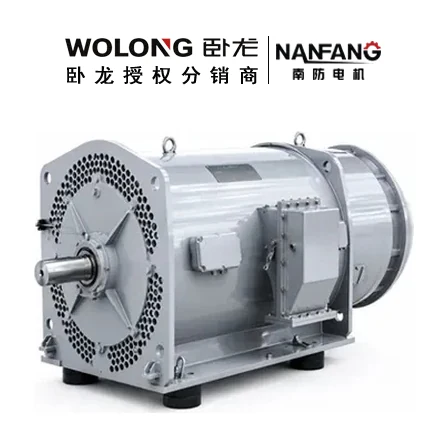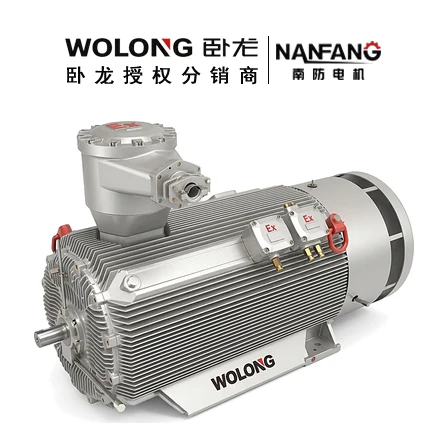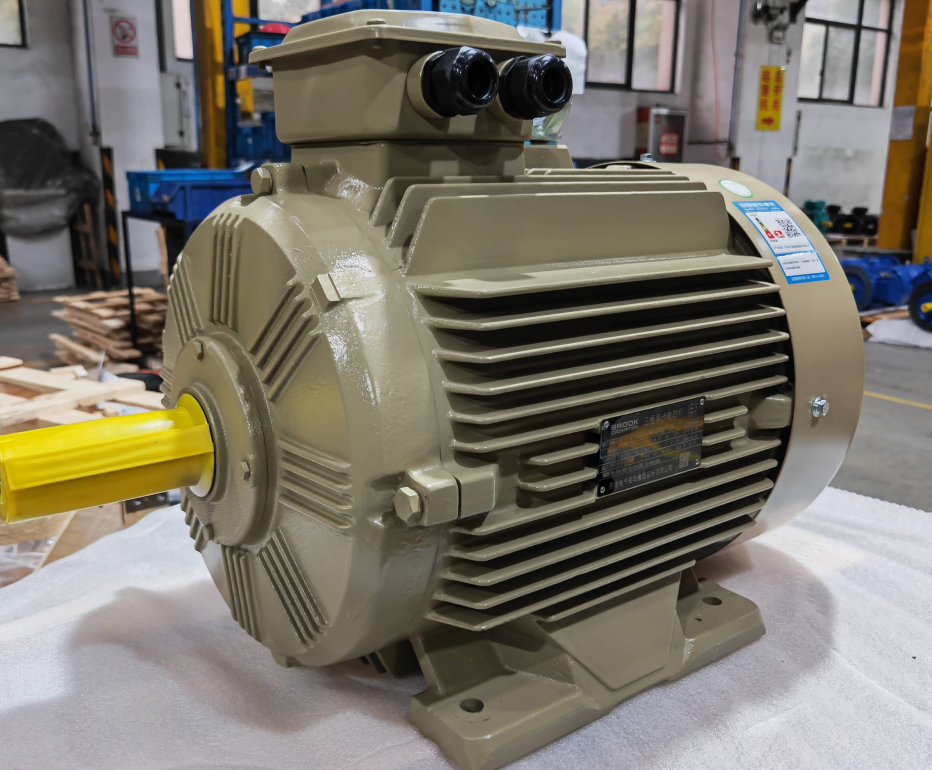
High-voltage motors are widely used in industrial applications such as power plants, mining facilities, petrochemical plants, and large pumping stations. These motors are often installed in environments with high humidity, significant temperature changes, or long periods of inactivity.
One important protective component commonly installed in high-voltage motors is the anti-condensation heater, also known as a motor space heater.
But why does a motor need a heater when its main challenge during operation is overheating?
The answer is simple: anti-condensation heaters help prevent moisture accumulation inside the motor during shutdown, protecting the winding insulation and improving long-term reliability.
1. Why Does Condensation Form Inside Electric Motors?
During normal operation, electric motors generate heat, keeping internal components warmer than the surrounding environment.
However, when a motor stops, its internal temperature gradually decreases.
If the temperature of internal surfaces falls below the dew point of the surrounding air, moisture can condense on the windings and other components.
This is particularly common in environments with:
High relative humidity
Large day-to-night temperature differences
Outdoor installations
Coastal or tropical climates
Long periods of motor shutdown
Even motors with relatively high enclosure protection ratings may experience condensation due to moisture already present inside the enclosure or temperature-related air exchange.
2. How Does Moisture Affect Motor Insulation?
The insulation system is one of the most important components of a high-voltage motor.
Moisture accumulation can reduce insulation resistance and increase the risk of electrical problems.
Potential consequences include:
Reduced insulation resistance
Increased leakage current
Surface tracking
Insulation deterioration
Electrical faults during startup
Unexpected equipment shutdown
For high-voltage motors operating at 3.3 kV, 6 kV, 10 kV, or higher voltages, maintaining a clean and dry insulation system is especially important.
Repeated exposure to moisture, particularly when combined with dust or contamination, can significantly affect insulation reliability.
3. How Does an Anti-Condensation Heater Work?
An anti-condensation heater is a small electrical heating device installed inside the motor enclosure.
Its purpose is not to heat the motor to its normal operating temperature.
Instead, it maintains the internal temperature slightly above the surrounding air temperature or local dew point, helping prevent moisture condensation.
The heater typically operates when the motor is stopped.
When the motor starts, the heater is normally switched off through an electrical interlock.
This operating arrangement helps prevent unnecessary heating while the motor is running.
The heater power depends on the motor size, enclosure design, ambient conditions, and manufacturer requirements.
4. Why Are Anti-Condensation Heaters Important for High-Voltage Motors?
Large high-voltage motors are often expensive, customized, and critical to industrial production.
Unlike small motors, they may remain out of service for extended periods during maintenance, standby operation, or seasonal production shutdowns.
During these periods, internal temperatures can fluctuate with environmental conditions.
Anti-condensation heaters help reduce moisture-related risks and provide several practical benefits:
Maintain more stable insulation conditions
Reduce the risk of condensation during shutdown
Help preserve insulation resistance
Improve reliability after extended standby periods
Reduce moisture-related maintenance problems
For motors installed outdoors or in humid industrial environments, space heaters are often recommended as part of the motor protection system.
5. Does Every Electric Motor Need an Anti-Condensation Heater?
Not necessarily.
The need for an anti-condensation heater depends on the actual operating environment and motor design.
For example, a standard low-voltage motor installed indoors in a dry, temperature-controlled facility may not require a dedicated heater.
However, heaters are more commonly specified for:
Large high-voltage motors
Outdoor motors
Marine applications
Motors in humid environments
Standby or emergency motors
Equipment with long shutdown periods
It is also important to understand that a space heater cannot replace proper motor storage, insulation testing, or maintenance.
If the insulation has already absorbed significant moisture, additional drying procedures may be required before the motor can be safely energized.
Conclusion
Anti-condensation heaters play an important role in protecting high-voltage motors during shutdown.
As motor temperatures decrease, moisture may condense inside the enclosure, potentially reducing insulation resistance and increasing the risk of electrical failure.
By maintaining suitable internal temperatures, anti-condensation heaters help reduce condensation and protect the motor insulation system.
For high-voltage motors operating in humid environments or experiencing long periods of inactivity, an anti-condensation heater is a simple but valuable protective feature.
When selecting a high-voltage motor, customers should consider ambient humidity, installation location, operating conditions, and expected shutdown periods to determine whether an anti-condensation heater is required.
SEO Information
SEO Title: Why Do High-Voltage Motors Need Anti-Condensation Heaters?
Meta Description: Learn why high-voltage motors need anti-condensation heaters, how motor space heaters prevent moisture damage, and how they protect winding insulation.
URL Slug: high-voltage-motor-anti-condensation-heaters
Primary Keyword: high voltage motor anti condensation heater
Secondary Keywords: high voltage motor space heater, motor anti condensation heater, electric motor condensation, motor winding insulation, motor moisture protection, high voltage motor maintenance, motor insulation resistance, electric motor space heater, industrial motor protection, motor heater