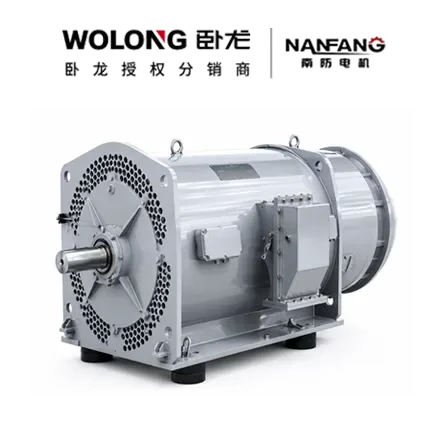
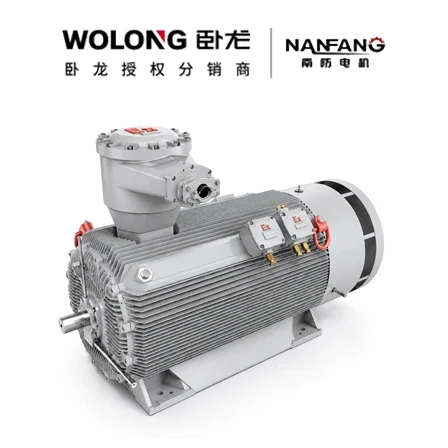
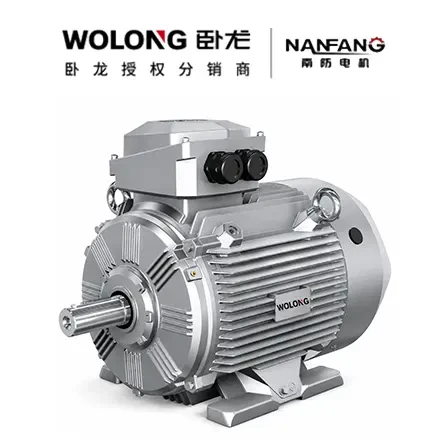
For petrochemical and refining projects, hazardous area classification is the foundation of motor specification. A wrong explosion protection selection will not only trigger FAT rejection and third-party inspection non-conformities, but also create permanent ignition risk around pumps, compressors, reboilers and loading arms. Unlike general industrial motors, Ex motors must align with zone probability, gas group (IIA / IIB / IIC), temperature class (T-code), and EPL (Equipment Protection Level) under IEC 60079 series, ATEX and IECEx standards. This article gives project engineers a practical zone-by-zone selection roadmap for explosion-proof motors in gas-vapor hazardous areas.
Zone Definition in Petrochemical Sites
First, clarify the three gas hazardous zones defined by IEC 60079-10-1, based on how often explosive gas-air mixture appears:
· Zone 0: Explosive atmosphere present continuously or for long periods. This zone is rarely applicable for rotating motors, as standard AC induction motors cannot achieve Ga EPL with acceptable CAPEX and maintainability. Instrumentation is the main equipment here.
· Zone 1: Explosive gas mixture is likely to occur under normal operation. Typical locations: pump seal areas, compressor casings, relief valve outlets, sampling points and tank roof vapour spaces. Required minimum EPL: Gb.
· Zone 2: Explosive atmosphere is not expected during normal operation; if it occurs, it only lasts a short time due to accidental leakage. This is the most common zone for petrochemical motor drives, including outdoor pump banks, cooling water pump houses, blower sets and non-critical process drives. Required minimum EPL: Gc.
Dust zones (20 / 21 / 22) are not covered in this article; they apply to plastic powder, catalyst dust and solid handling units, requiring Ex tD protection.
Main Protection Types for Petrochemical Motors
Three protection concepts dominate HV and LV explosion-proof motors for petrochemical projects: Ex d, Ex e and Ex nA. Ex p (pressurized) is a supplementary option for large high-voltage motors when other protection types are technically limited.
Ex d – Flameproof Enclosure (IEC 60079-1)
Ex d is the flameproof design. The motor enclosure can contain an internal explosion and cool flame through precision flame gaps, preventing ignition of the surrounding explosive atmosphere. It is certified for Zone 1 (Gb) and also permitted for Zone 2 as an over-specified safer option.
This is the default choice for critical Zone 1 process pumps and compressors in refineries, ethylene units and LPG facilities. It supports IIA, IIB and IIC gas groups, and can be built with T3, T4 or even T5 temperature class. For high voltage motors above 3 kV used in Zone 1, Ex d or Ex de composite design is the mainstream specification.
Limitations: Ex d motors are heavy, casting machining tolerances are strict, terminal box flame paths require regular inspection. Opening the terminal box when energized is forbidden. VFD-fed Ex d motors need extra thermal validation to ensure surface temperature stays within T-code limits across the whole speed range.
Ex e – Increased Safety (IEC 60079-7)
Ex e does not contain explosion. Instead, it eliminates potential ignition sources by stricter winding insulation, lower temperature rise, reliable terminal connections and reinforced clearances. It is suitable for Zone 1 (Gb) and Zone 2.
Ex e is widely selected for low and medium voltage Zone 1 motors where Ex d weight and cost are undesirable. It is common for fans, small compressors and auxiliary process drives. A key point for engineers: Ex e motors used with VFD must go through type test together with the drive. Without combined VFD certification, Ex e cannot be accepted for variable-speed duty, as harmonic heating may break the temperature limit.
Ex nA – Non-Sparking Motor (IEC 60079-15)
Ex nA non-sparking motors are only allowed for Zone 2 (Gc). Under normal operation and defined minor fault conditions, no arcs, sparks or dangerous hot surfaces will be generated. It is simpler, lighter and lower cost than Ex d and Ex e.
Most general-service Zone 2 pump motors, raw water pumps, air blowers and utility area drives adopt Ex nA. It is the most cost-effective option for large fleets of non-critical motors. Important boundary: Ex nA cannot be used for Zone 1. It is not a downgraded Ex d, but a dedicated protection concept for low-probability leakage scenarios.
Ex p – Pressurized Enclosure (IEC 60079-2)
For very large high voltage motors (above 4 MW), Ex d enclosure size and weight become impractical. Ex p pressurized protection keeps the motor interior under clean inert or instrument air pressure, so external flammable gas cannot enter. It can be Zone 1 (Gb) or Zone 2 (Gc). This is often seen on main large compressor motors in petrochemical complexes. It requires air supply, pressure switches, interlock trip logic and regular purging maintenance.
Step-by-Step Zone Selection Guide
1. Zone 0: Standard induction motors are not specified here. Select intrinsically safe instruments only.
2. Zone 1 (Critical process pumps, compressors, seal leakage zones):
· Preferred: Ex d (Ex de) for HV motors; Ex d or Ex e for LV motors.
· Gas group: match IIA / IIB / IIC according to site gas (IIC covers hydrogen, acetylene, the strictest group).
· T-class: select T3 (200°C max surface) or T4 (135°C max surface) for most hydrocarbon vapours.
3. Zone 2 (General pump banks, outdoor fans, utility drives):
· Preferred: Ex nA for cost control; Ex d / Ex e also acceptable if client or EPC standard requires higher safety margin.
· T4 is strongly recommended for gasoline, solvent and light naphtha vapour, which have low autoignition temperature.
4. Large HV compressor motors in Zone 1: evaluate Ex p pressurized design as an alternative to heavy Ex d.
Common Pitfalls Petrochemical Engineers Must Avoid
· Confusing gas group: A IIB motor cannot be used for IIC service (hydrogen). The marking must be II C T4 Gb, not IIB.
· Ignoring VFD derating and combined certification: Ex e and Ex nA motors on variable frequency drives need full thermal test data, not just nameplate temperature rise.
· Overlooking terminal box rating: many Ex motor failures come from incorrectly certified terminal boxes, not the motor body.
· Mixing EPL: A Gc motor cannot be upgraded to Gb just by adding sensors; the protection concept itself determines EPL.
· Temperature class mismatch: T3 is not automatically safe for all solvents. Always reference the autoignition temperature of the process fluid.
Notes
Zone classification is done by the process safety team, but electrical engineers are responsible for mapping the zone into the correct Ex protection marking. For most petrochemical projects, Zone 1 critical loads use Ex d / Ex de, Zone 2 general loads use Ex nA, and large HV compressors may use Ex p.
When you review datasheets, tender documents or FAT protocols, check the full marking format: Ex d IIB T4 Gb, Ex e IIA T3 Gb, Ex nA IIB T4 Gc. Our engineering team supports petrochemical EPC and end-users with Ex motor marking review, VFD thermal validation, certificate verification and hazardous zone specification alignment. Contact us to review your pump and compressor motor list for your refinery or chemical plant.