

Compared with the 3 phase motor wound rotor, the quality safety of the cage rotor is relatively good, but for the occasions of frequent starting and large moment of inertia, the cage rotor will also have quality problems.
Relatively speaking, the quality and reliability of the cast aluminum rotor is better, the rotor guide bar and the rotor core are coupled well, and the heat resistance is strong when the motor starts. However, the quality defects such as shrinkage holes and thin strips occurred in the process of casting aluminum, as well as the problem of guide bar pulling due to rotor heating can not be ignored, especially for the situation of poor guide bar materials and poor casting aluminum technology, the problem is more serious.
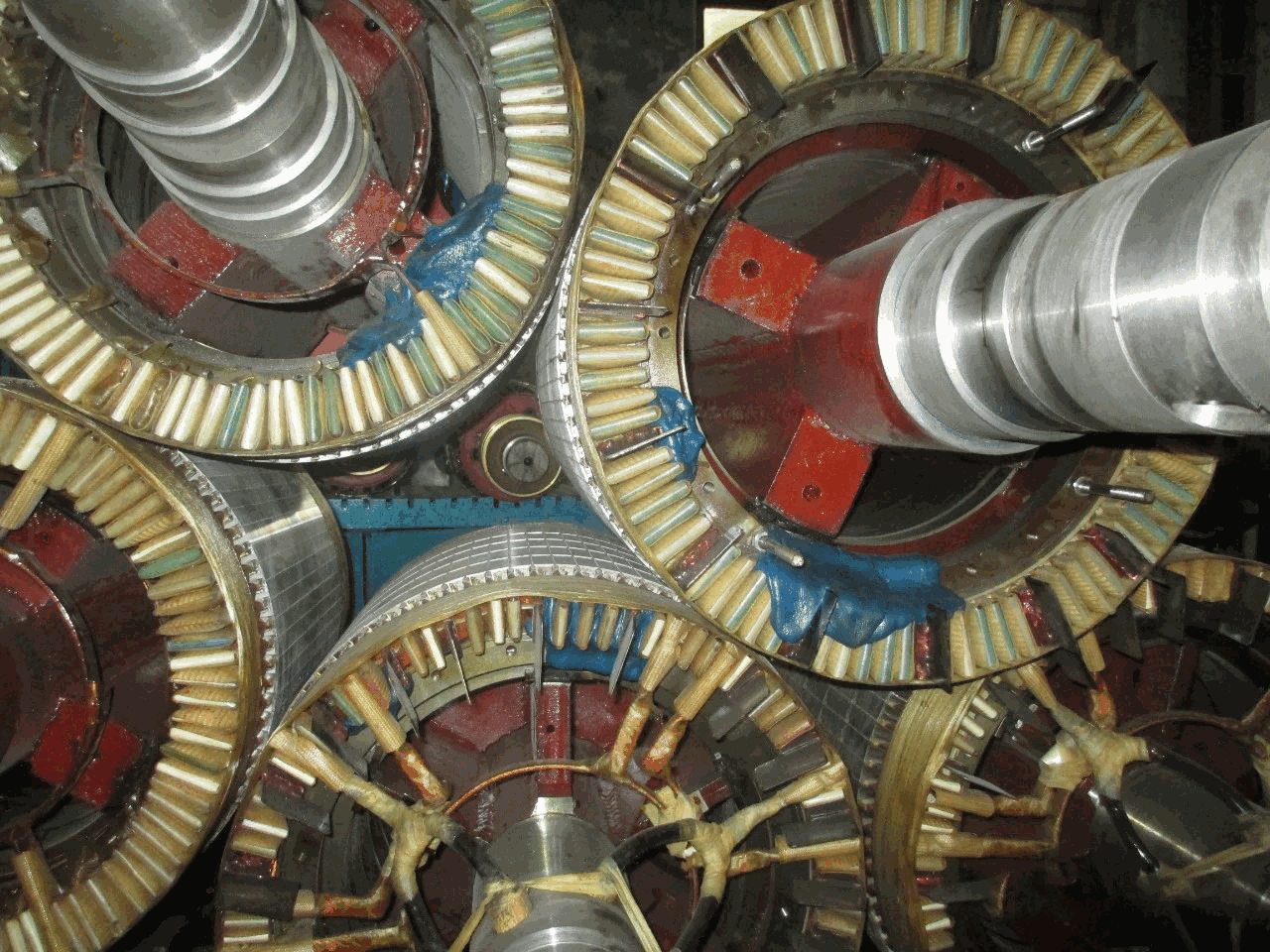
When the cast aluminum rotor has a problem, it can generally be judged from the external surface of the rotor and some other quality phenomenon analysis, when the rotor is broken, it will be seriously heated, and there will be obvious bluing phenomenon on the rotor surface locally or completely, and there will be small aluminum beads formed by hot flow aluminum, which mostly occurs in the middle of the guide strip. When the aluminum cast rotor is hot, the rotor end ring will be deformed, and the wind blade at the rotor end will be thrown out radially, and the stator winding will be damaged.
For 3 Phase Induction Motor's double-cage rotors, deep-slot rotors, and bottle rotors used to improve starting performance, once the rotor guide bar breaks, most of the breakage occurs at the welding place near the end ring. The fracture of rotor cage is due to the repeated action of long-term thermal stress, alternating electromagnetic force, centrifugal force and tangential stress. The bending and fatigue damage of the guide bar will occur, and the cage bar and end ring are the most prone to problems. In the process of motor starting, because of skin effect, the rotor guide bar is not evenly heated, and the rotor cage bar is subjected to bending stress towards the axis; When the motor is running normally, the rotor guide bar and the end ring are subjected to centrifugal force, and the guide bar produces bending stress in the back axis, which will threaten the reliability of both ends of the rotor guide bar.
In order to improve the welding quality of rotors, medium frequency brazing technology has been gradually applied to the welding process of large rotors.
