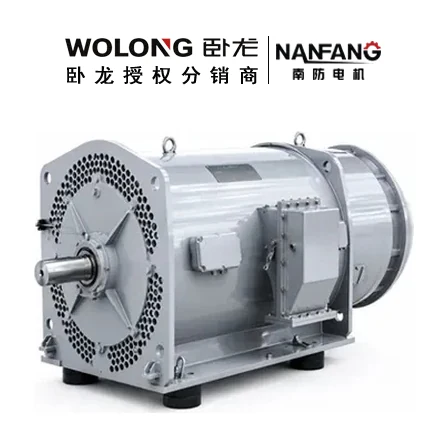
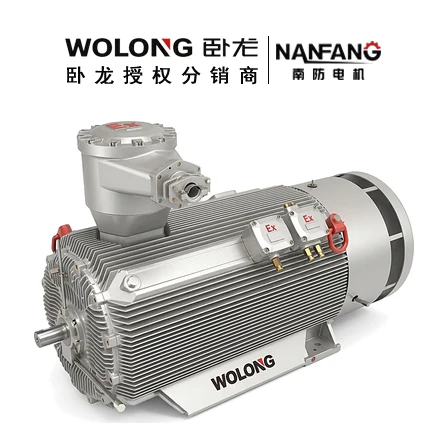
For low-voltage, high-power and high-voltage motors, most use radially ventilated or axially ventilated iron cores. The radial ventilation structure is to divide the stator and rotor iron cores of the motor into several sections; while the axial ventilation duct is to open some axial holes in the yoke of the motor stator and rotor punchings, and then stack them into the iron core to form an axial ventilation duct. When these ventilation ducts participate in the operation of the motor ventilation and heat dissipation equipment, the heat will be directly introduced into the heat dissipation path of the whole machine. For some cases with a higher protection level and where the inner cavity of the motor and the external ventilation and heat dissipation equipment cannot form a direct convection effect, what is the role of these ducts in the inner cavity? When the motor is running, the motor stator winding, rotor and bearing system are the main heat-generating elements. Due to the particularity of the shape and physical position of each element, as well as the shape and structural characteristics of the matching parts, the heat generated at each position of the same element is also different. Heat accumulation may occur at a certain position, that is, the temperature at this position is much higher than that at other positions. Local heat accumulation is extremely unfavorable to the part body, especially the motor winding, and may cause insulation aging problems in the local winding, which will then spread to the entire winding. After adopting a radial or axial ventilation structure, the flowing air can disperse the local heat to other positions, evenly distribute the temperature of the motor components as a whole, and dissipate the heat through the motor's heat dissipation system to ensure the safety of the motor operation.

For most forced ventilation motor structures, the motor cavity and the heat dissipation device are in a conductive state. According to the actual characteristics of the motor, they are divided into axial ventilation, radial ventilation and mixed ventilation structures. As the overall structure of the motor, the motor air path must ensure that the temperature rise level of the motor meets the requirements. On the other hand, it plays a key role in the vibration and noise of the motor. When the air path design is not reasonable, the motor will have a large ventilation noise, affecting the application effect of the motor.
three phase Motor,Flameproof three-phase asynchronous motor-Wolong Nanyang Explosion Protection